Introduction: The Rumor and Its Origins
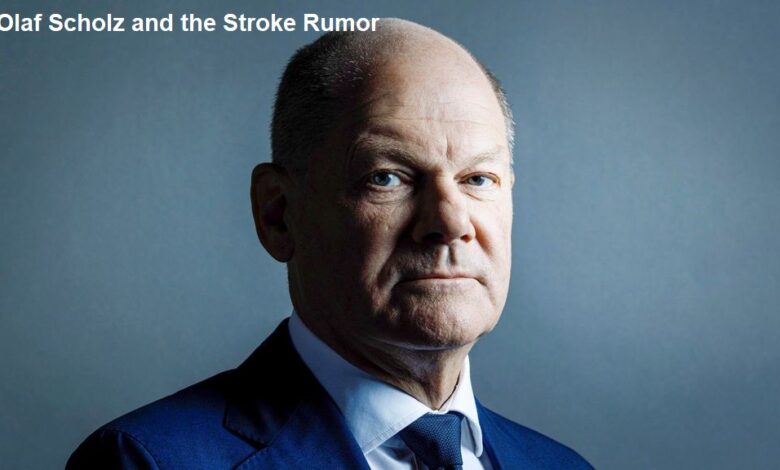
Olaf Scholz and the Stroke Rumor Lately, on German and international social media, there has been speculation that Olaf Scholz might have suffered a Schlaganfall—a stroke. The notion gains traction because any health scare involving a prominent political figure draws attention fast. But rumors and reality often diverge. In this article, we’ll dig into what is claimed, what credible evidence exists (or doesn’t), how to assess health rumors about politicians, and what the most likely truth is.
When a rumor like “Olaf Scholz Schlaganfall” surfaces, it’s important to separate speculation from verifiable fact. A stroke is a serious medical event with specific symptoms and typically leaves detectable traces. If those signs are missing, the claim deserves skepticism. Here’s what we can piece together so far.
What People Are Claiming (and Why)
Origins of the Rumor
Believers point to a few observable events: Scholz’s fall while jogging, visible facial bruising or an eye patch, missed appointments, and lack of clarity from official sources. These small anomalies get amplified in media echo chambers and social networks, morphing into bigger claims—like a stroke.
Sometimes rumors start innocently as speculations: someone sees Scholz canceling a meeting and wonders “why?” Someone else suggests “maybe health issues,” and before long “stroke” is in the thread. Once it enters public discourse, especially in partisan or sensationalist environments, it spreads.
Connecting Dots That Don’t Always Connect
One commonly cited incident is Scholz’s fall while jogging. He is reported to have bruised his face and canceled some appointments. Observers seized on these cues and inferred a serious neurological event. But bruises and missed meetings are not proof of a stroke. They might signal injury, fatigue, or precaution—but not necessarily a cerebral event.
Other claims suggest that because Scholz has worn an eye patch in public or looked “haggard” in photos, that must indicate brain injury. This is a leap: visible injury does not equate to a stroke unless backed by neurological evidence.
Amplification Through Speculation
Once a few voices float the possibility, more people repeat or embellish it. Some use it for political leverage—casting doubt, sowing uncertainty, questioning fitness for office. Others simply follow the “if it’s dramatic, it must be true” impulse. But dramatic claims require dramatic evidence—and in this case, we don’t have it.
What the Evidence (or Lack Thereof) Shows

Official Statements and Silence
To date, there is no credible, official confirmation that Scholz has ever had a Olaf Scholz and the Stroke Rumor: Myths, Facts, and What We Really Know stroke. Neither his office nor German health authorities have declared such a diagnosis. This is critical: a high-profile medical event like a stroke would normally generate medical briefings, statements from doctors, or at least mention in press releases. The absence of any such disclosure leans heavily against the rumor.
Known Incident: Jogging Fall
What is well documented: Scholz experienced a fall while jogging and sustained bruising, particularly around his face. He canceled some weekend appointments and publicly appeared with an eye patch. His spokesperson described it as a “small sports accident.” These are validated facts. But they don’t equate to a stroke. They are consistent with a simple injury.
He later shared a photo of himself with bruising and a patch, with a caption suggesting things looked worse than they were. He acknowledged the fall publicly and seemed to downplay any serious health concerns.
Absence of Neurological Symptoms
A stroke, by definition, affects blood flow in the brain, often causing sudden neurological deficits: slurred speech, facial drooping, arm/leg weakness, vision changes, confusion, or severe headaches. There are no credible reports that Scholz exhibited these classic signs. No physician has come forward with evidence of such symptoms. That absence is significant — if a stroke had occurred publicly, some signs would almost certainly have surfaced.
Rapid Return to Public Role
After the fall incident, Scholz went on to resume many of his public roles and appearances. There’s no record of a long-term hospitalization, rehabilitation period, or public medical absence beyond what was already acknowledged due to injury. If there were a stroke, particularly of moderate to severe impact, one would expect a more extended recovery period.
Why This Rumor Persists
The Nature of Political Speculation
In politics, health rumors are a recurring theme. When a leader shows any physical vulnerability—walks with a limp, cancels a meeting, looks tired—speculators always whisper. The public, hungry for insights, often accepts or spreads what they hear, especially if it fits existing narratives (e.g. “older leaders decline,” or “something’s wrong behind the scenes”).
Cognitive Biases & Jumping to Conclusions
Humans are pattern-seeking. We see an injured face + missed event = maybe health crisis. It’s a logical jump many make automatically. Confirmation bias intervenes: once you suspect something, you interpret all further odd signs as supporting that suspicion.
Also, sensational stories spread faster. “Did the chancellor have a stroke?” is more clickworthy than “he fell while jogging.” The more dramatic the claim, the higher its viral potential — regardless of evidence.
Media Echo Chambers
Some blogs, forums, or social media accounts repeat the rumor without checking sources. Echoes get mistaken for verification. The more times you see it, the more credible it seems—even if nobody ever proved it.
How to Critically Evaluate Health Rumors About Public Figures
- Check for credible medical or official statements
If a serious medical event happened, doctors, hospitals, or official spokespeople usually confirm it. Silence or denials matter. - Look for concrete symptoms, not vague inferences
Bruises, fatigue, or facial changes are possible signs—but not diagnostic. You need documented neurological signs or medical imaging to confirm a stroke. - Examine timelines and consistency
A real stroke would likely lead to hospitalizations, therapy, and gaps in public activity. Consistency with observed activity (no long absences, no medical disclosures) is important. - Consider motive and amplification
Some rumors serve agendas: to undermine a political figure, to gain clicks, or to sow doubt. Seeing who benefits from spreading the rumor can help assess its plausibility. - Demand evidence, not repetition
A claim repeated many times isn’t proof. Evidence—medical reports, photographs, imaging studies, credible expert commentary—is what counts.
Likely Conclusion: No, Scholz Did Not Have a Stroke
Putting together all the pieces, the most reasonable conclusion is: the stroke rumor is unsubstantiated and highly unlikely. The documented facts (fall, bruising, canceled appointments) reconciled with absence of medical disclosure, lack of neurological symptoms, and his inclusive return to public duties all strongly contradict the notion of a stroke.
Rumors are sometimes born from small kernels of truth (yes, he fell), but they balloon beyond what the facts support. In Scholz’s case, the leap from “fall + injury” to “stroke” is not backed by credible evidence.
Unless future credible disclosures or medical records emerge, the responsible stance is skepticism. In public discourse, especially about health, speculation should not be mistaken for confirmation.